
A month ago, I noticed something odd in my own search habits. I was getting answers from Google’s AI Overviews or from ChatGPT without clicking through to any website. That small shift in my behavior is why AI search SEO strategies are becoming increasingly important for businesses and digital marketers.
How AI Search SEO Strategies Are Changing Search
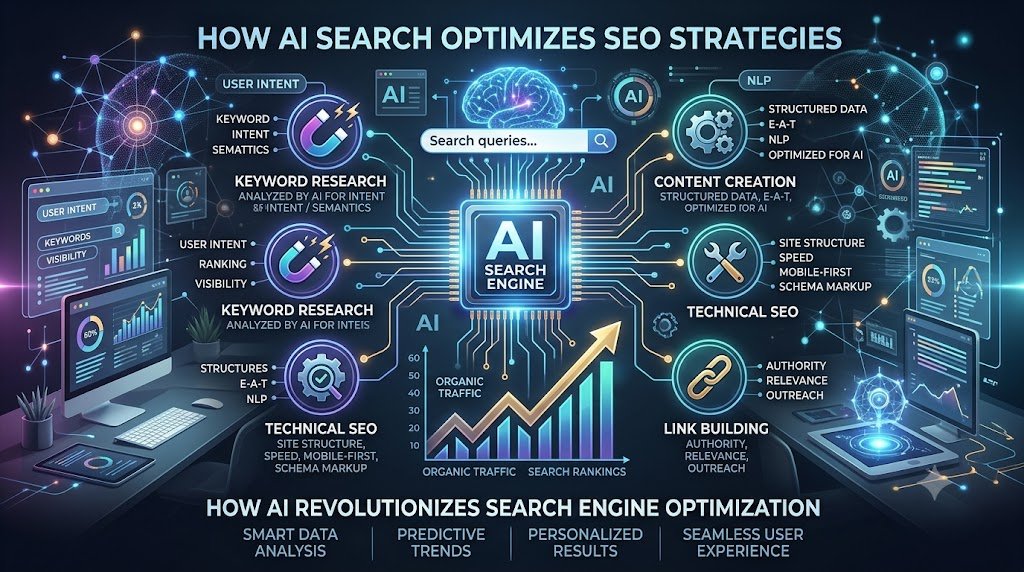
Search engines used to be a directory. You typed a query, received ten links, and clicked the one that seemed most useful. Today, AI search SEO strategies focus on adapting to a new search experience. Instead of simply pointing users to a page, search engines and AI assistants read information from multiple sources, summarise it, and provide answers direct.AI search SEO strategies Modern AI search SEO strategies help businesses create useful content that answers users’ questions and improves their online visibility.
This change means that traditional SEO techniques alone may not be enough. Effective AI search SEO strategies help websites create useful, trustworthy, and well-structured content that AI systems can understand and reference. Ranking #1 still matters, but it is no longer the whole game. With the right AI search SEO strategies, getting cited as a source behind an AI-generated answer is another important goal.
A month ago, I noticed something odd in my own search habits. I was getting answers from Google’s AI Overviews or ChatGPT without clicking through to any website. That small shift in my behavior is why AI search SEO strategies now look different from the SEO playbook most of us learned five years ago. These AI search SEO strategies help businesses create useful, relevant content that answers users’ questions, improves online visibility, and increases the chances of being featured in AI-generated answers.
Search engines used to be like directories. You typed a query, received ten links, and clicked the one that seemed most useful. AI search changes that model entirely. Instead of simply pointing you to a page, a search engine or AI assistant reads information from several pages, synthesises an answer, and presents it directly to the user. This change is why AI search SEO strategies are becoming increasingly important for businesses that want to improve their online visibility. Ranking #1 still matters, but it is no longer the whole game. Getting cited as a trusted source in AI-generated answers is now an important part of modern SEO.
Suggested image: split-screen graphic showing a 10-blue-links SERP next to an AI Overview panel. Alt text: “Traditional Google search results compared to an AI Overview summary.”
Why This Shift Is Real, Not Hype
It is tempting to treat “AI’s changing search” as a marketing buzzphrase. The data says otherwise. Organic click‑through rates on Google searches that show AI Overviews have been volatile but consistently lower than searches without them, though Search Engine Land has reported signs of recovery as of early 2026. Multiple independent studies – with methodologies and different numbers – all point in the same direction: when an AI summary appears above the results, fewer people click through to any website at all. Searchengineland.
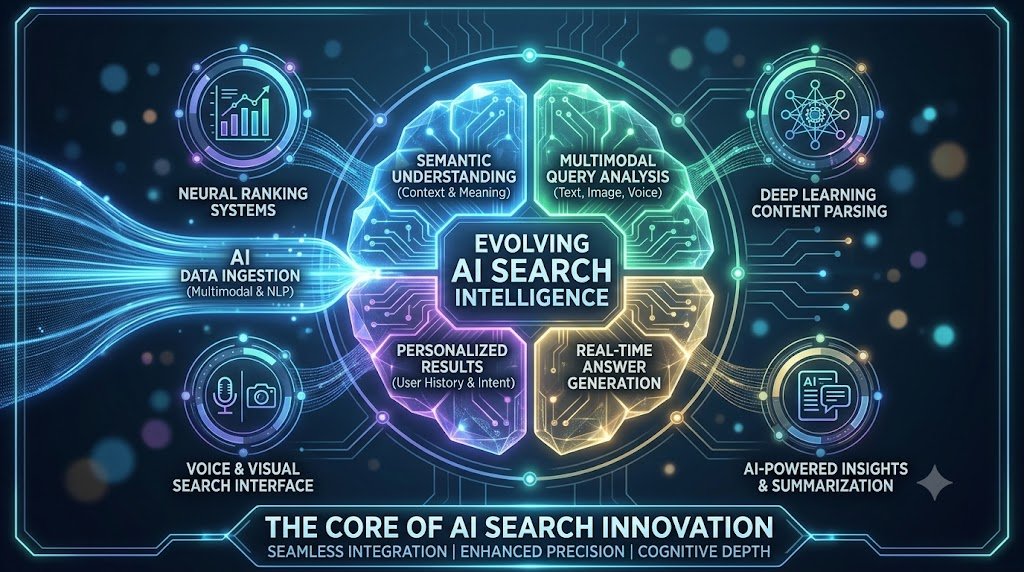
What this means practically: content built purely to “rank and hope for a click” is a bet more than it used to be. Content built to be clear, well‑structured and genuinely useful has a shot at being pulled into the answer itself – and at earning the click when a curious reader wants more detail.
The Mistake Most Businesses Are Still Making
The common mistake I see – and one I have corrected in my own work – is treating SEO as a keyword‑placement exercise. Businesses stuff in variations of a phrase to hit a “target word count “. Call it done. That approach is increasingly invisible to AI search.
AI systems are not counting keyword density. They are evaluating whether a paragraph actually answers a question, cleanly and accurately, without forcing the reader (or the AI) to dig for it. Keywords still matter – they signal topic and intent. They are no longer sufficient on their own.
Traditional SEO vs. AI-Search SEO
Understanding the difference between traditional SEO and AI-powered search is essential for developing effective AI search SEO strategies.
| Factor | Traditional SEO | AI-Search SEO |
|---|---|---|
| Primary goal | Rank higher in search results | Get cited or referenced in AI-generated answers |
| Content style | Keyword-optimized, detailed content | Clear, helpful content with direct answers |
| Success signal | Rankings and click-through rate | AI citations, visibility, and click-through rate |
| Content structure | Headings that help readers skim | Clear headings, question-based sections, and direct answers |
| Keyword use | Relevant keywords to target search intent | Natural keyword use that reflects user intent and context |
A Simple Framework for Writing AI-Search-Friendly Content
Here is the process I actually use, refined through trial and error on client and portfolio work:
- Understand the search intent. Pick a main keyword. Before writing a word, know what the searcher wants – informational comparison or ready‑to‑buy.
- Research the topic properly. Look at what’s already ranking and what is missing. Gaps are opportunities.
- Organize with headings. Each heading should work as a question a reader (or an AI) might ask.
- Answer directly early. Do not bury the answer in a paragraph. Say it plainly, then explain.
- Add keywords naturally. Secondary and semantic terms should appear because the topic genuinely calls for them, not because a checklist demands it.
- Do a QA pass for accuracy, readability, internal links, and overall usefulness before publishing.
This isn’t a new system – it is the same discipline good writers have always used, applied more deliberately now that clarity and structure directly affect visibility.
A Real Example: Making a Service Page AI-Search SEO Strategies Friendly
I applied this on a marketing service page on my own portfolio site. The changes were simple: headings, direct answers instead of marketing fluff, naturally placed related keywords, and internal links tying the page to related content on the site.
I do not yet have traffic figures to show. There is no dramatic “+200% clicks” claim, and I want to be honest about that. What I did observe is that the content became easier to read, better organized, and more useful for a visitor skimming on their phone. This is a claim compared to a traffic graph, but it is an honest one, and it reflects the same quality signal that AI search engines are increasingly designed to detect.
Internal & External Linking Opportunities
• Internal link suggestion: Link this post to a piece on keyword research or on‑page SEO basics on your own site so readers (and crawlers) can explore a subtopic.
• External link suggestion: Link out to a current source on AI overview performance data, such as Search Engine Land’s ongoing coverage of AI overview click‑through trends, to support the claims above with authoritative up‑to‑date reporting.
FAQs
Does SEO still matter if AI search gives people the answer directly?
Yes. Someone still has to be the source that AI pulls from… A portion of readers will always click through for depth, proof, or a second opinion.
Do I need to abandon keyword research?
No. Keyword research still tells you what people are searching for and why. What has changed is that keywords alone no longer guarantee visibility. Clarity and structure do the rest.
How is “getting cited” by an AI from ranking #1?
Ranking is about position on a results page. Citation is about whether an AI system judges your content trustworthy and clear enough to quote or summarize when building its answer.
Is there a way to check if my content is AI‑search friendly?
Read your three headings out loud. If each one sounds like a question and the paragraph below it answers that question in the first sentence, you are on the right track.
Conclusion: Actionable Takeaways
AI search has not made SEO obsolete. It has made shortcuts obsolete. The businesses that succeed going forward will be the ones that:
• Write content that answers real questions clearly, not just content stuffed with keywords.
• Structure pages so both humans and AI systems can navigate them at a glance.
• Treat linking and related‑keyword use as a natural part of good writing, not an afterthought.
• Stay honest about what you know and what you do not know. Trustworthiness is now a ranking signal, in its